
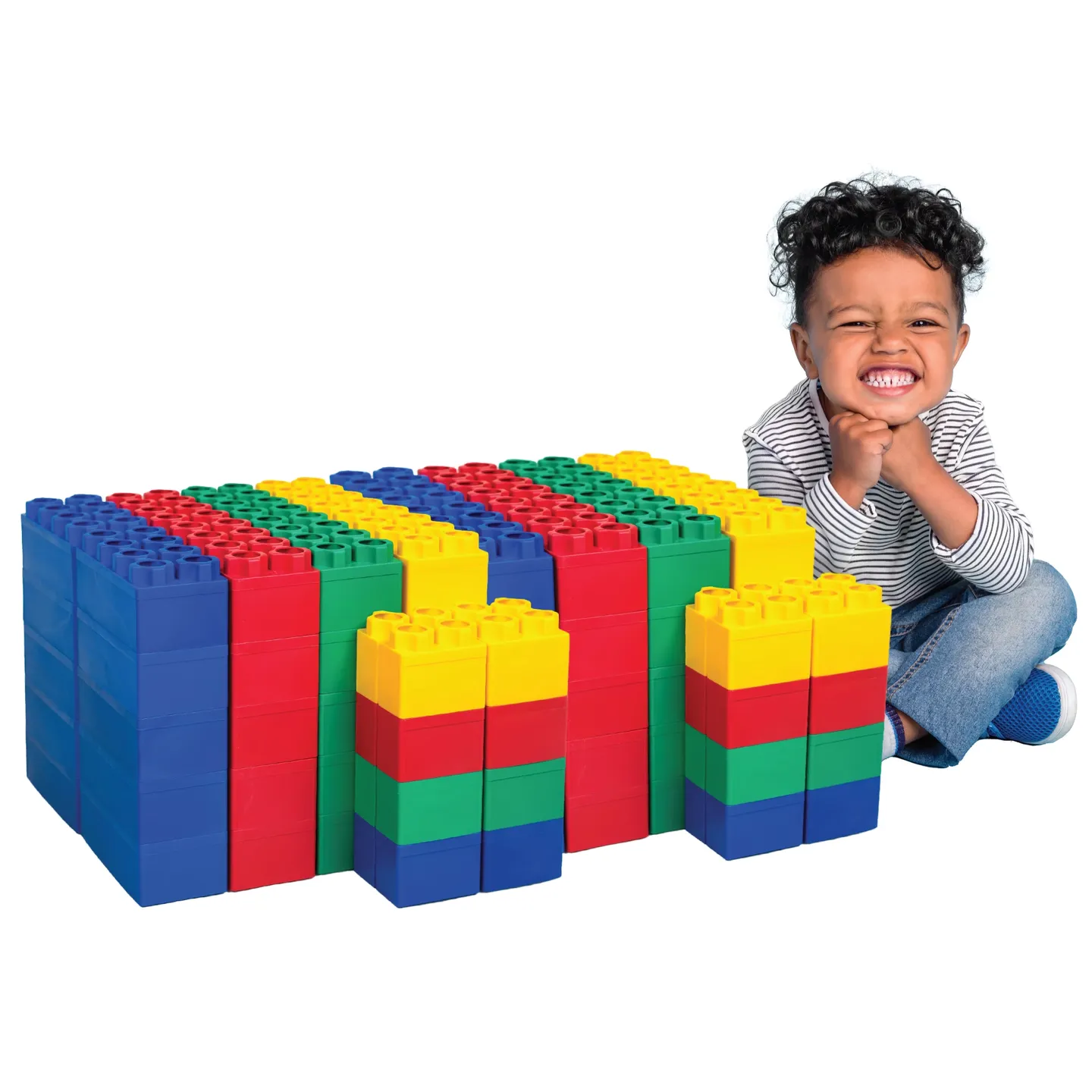
Giant Building Blocks make it possible for children to explore large-scale construction while enjoying creative, hands-on play. Giant Building Blocks can be used to create towers, walls, houses, bridges, forts, and imaginative play spaces that turn an ordinary room or play area into a construction zone. When used appropriately, Giant Building Blocks encourage children to think about balance, stability, structure, and design while having fun. With suitable materials, adequate space, age-appropriate supervision, and sensible building rules, Giant Building Blocks can provide an engaging way for young builders to experiment with giant structures safely.
Why Build Giant Structures?
Children are naturally interested in making things bigger and more impressive. A small tower can be exciting, but constructing something large enough to walk around or play inside can make the experience even more engaging.
Large-scale construction encourages children to plan before they build. They need to consider where the foundation should go, how pieces should be arranged, and how the structure can remain stable.
Encouraging Creative Construction
Large building materials provide children with opportunities to turn imagination into physical structures. A collection of blocks can become a castle, fire station, animal shelter, spaceship, or giant home.
Giant Building Blocks are especially useful for open-ended construction because children can experiment with different layouts and rebuild their creations whenever they want.
Understanding Stability and Balance
Safety begins with understanding how structures behave. Children can learn simple principles by observing what happens when they stack pieces in different ways.
A wide foundation is generally more stable than a narrow one, while uneven surfaces can make structures more difficult to keep balanced. These observations introduce basic engineering concepts through play. For more information about large building blocks for kids, explore their features, benefits, age suitability, and role in encouraging imaginative and educational play.
Start With a Strong Foundation
A stable base is one of the most important elements of a construction project. Encourage children to place larger or wider pieces at the bottom when appropriate and create a solid foundation before adding height.
Giant Building Blocks can help children visualize this concept because their larger size makes changes in structure easy to observe. If a design becomes unstable, children can rebuild the foundation and test a different approach.
Choosing Suitable Building Materials
Not every construction product is designed for giant structures. Parents should consider the material, design, size, weight, and intended use before allowing children to build large creations.
Check Age Recommendations
Always follow the manufacturer's recommended age range and safety instructions. Children should use construction materials that match their developmental abilities.
Giant Building Blocks should be easy enough for children to handle safely while still offering opportunities for creative construction. Avoid using materials in ways that the manufacturer does not recommend.
Consider Weight and Size
Large pieces should be manageable for the intended users. If a component is too heavy, children may struggle to move it safely.
Lightweight construction materials can make it easier for children to participate in building while reducing unnecessary strain. However, parents should still assess each product according to its specific design and instructions.
Creating a Safe Construction Area
A suitable environment is just as important as the building materials. Children need enough open floor space to construct large structures without coming into contact with furniture, fragile objects, or other hazards.
Remove unnecessary obstacles before construction begins. Keep walkways clear so children can move around the project safely.
Use a Stable Surface
Construction should take place on a stable, level surface whenever possible. Uneven flooring can affect the stability of structures and increase the likelihood of pieces shifting.
Giant Building Blocks should be used according to the manufacturer's instructions regarding suitable surfaces and environments.
Safe Height Guidelines
Children may naturally want to build as high as possible. However, taller structures can present additional risks if they become unstable.
Parents should follow the manufacturer's guidance and use sensible judgment based on the child's age, the product's design, and the environment.
Focus on Stability Over Height
A lower, stable structure can provide more enjoyable play than a tall structure that repeatedly collapses. Encourage children to experiment with strong designs instead of focusing only on maximum height.
Giant Building Blocks can be used to create wide castles, long walls, tunnels, and connected buildings rather than only vertical towers. This provides many creative possibilities while keeping the focus on thoughtful construction.
Building Bridges and Tunnels
Giant structures do not have to be tall. Bridges, tunnels, gateways, and connected pathways can provide exciting construction challenges.
Children can create a bridge for toy vehicles or design a tunnel through which they can move safely, provided the structure and product are specifically suitable for such use.
Experimenting With Structure
Building a bridge encourages children to think about support. They can explore how placing supports at different points changes the structure.
Giant Building Blocks allow children to experiment with these ideas through physical play. Parents can ask questions about why one design works better than another without providing every answer.
Cooperative Giant Construction
Large projects are often more enjoyable when several children participate. Siblings and friends can divide responsibilities and contribute to different sections of a shared structure.
One child might create the entrance, another could build walls, and another could design a separate room. This encourages teamwork and communication.
Teaching Construction Rules
Before group play begins, establish simple rules. Children should avoid throwing pieces, pulling apart someone else's structure without permission, or climbing on constructions unless the product is specifically designed for that purpose.
Giant Building Blocks can support cooperative play when children understand how to handle materials respectfully and safely.
Imaginative Structures for Children
Once children understand basic construction principles, they can combine safety with creativity. Encourage them to build structures that have a purpose within their imaginary world.
They might create a rescue center, castle, airport, animal hospital, space station, or futuristic city.
Create a Giant Playhouse
A large pretend house can include separate areas for different activities. Children can design entrances, walls, rooms, and decorative features.
Giant Building Blocks can provide the basic framework for this type of imaginative environment. Add age-appropriate toys and storytelling elements to make the finished creation more engaging.
Learning Through Construction Challenges
Building challenges can make giant construction more educational. Instead of simply asking children to build the tallest structure, provide practical problems to solve.
Ask them to create a stable tower, design a bridge between two points, construct a shelter for a toy, or build a structure using a limited number of pieces.
These activities encourage planning and critical thinking. Giant Building Blocks give children a flexible physical medium for testing different solutions.
Inspection and Maintenance
Regular inspection is an important part of safe construction play. Check pieces for cracks, broken connections, sharp edges, or other damage before use.
Damaged components should be removed from the play area according to the manufacturer's recommendations.
Giant Building Blocks can last longer when they are stored correctly and kept away from conditions that could damage the material.
Organize After Play
Cleanup is another opportunity to teach children responsibility. After dismantling their structure, children can sort the pieces and return them to an appropriate storage area.
Organized storage reduces clutter and makes the next construction session easier to begin.
Frequently Asked Questions
1. Are Giant Building Blocks safe for making large structures?
They can be suitable when the specific product is designed for large construction and is used according to the manufacturer's instructions. Children should have an appropriate play area and supervision suited to their age and the activity.
2. How can children build more stable structures?
Encourage them to begin with a stable foundation, use suitable pieces for the base, keep structures balanced, and avoid unnecessary height. Children can learn stability through supervised trial and error.
3. Should children climb on giant block structures?
Only if the specific product is explicitly designed and approved for climbing or supporting body weight. Otherwise, children should not climb on construction structures.
4. What can children build with large construction pieces?
They can create towers, houses, castles, walls, bridges, tunnels, garages, animal shelters, pretend cities, and many other imaginative structures.
5. How should large building pieces be stored?
Store pieces according to the manufacturer's recommendations. A suitable container or dedicated storage area can keep materials organized, reduce clutter, and make inspection easier.
Conclusion
Building giant structures can be an exciting way for children to explore creativity, engineering concepts, teamwork, and imaginative play. The key is to combine creative freedom with sensible safety practices.
Giant Building Blocks provide flexible materials that can be transformed into towers, castles, houses, bridges, tunnels, and complete imaginary worlds. Children can learn about balance and stability by experimenting with different designs while developing coordination and problem-solving skills.
A safe construction experience starts with age-appropriate materials, a stable play surface, adequate space, and clear rules. Parents and caregivers should follow product instructions, inspect materials regularly, and provide supervision appropriate to the child's age and the complexity of the project.
With these precautions in place, Giant Building Blocks can make large-scale construction both educational and enjoyable. Instead of simply building bigger, children can learn to build smarter, plan carefully, work together, and turn creative ideas into structures they can proudly explore.